
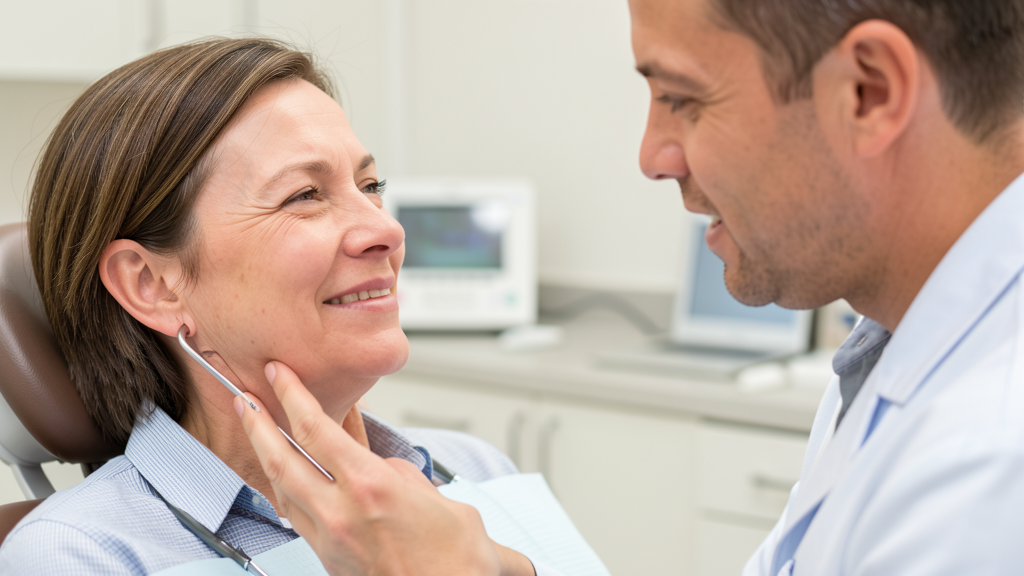
When someone tells me their jaw is sore, I do not start by assuming they need Botox. I start by asking what the symptoms actually feel like.
Is the soreness worse in the morning? Do headaches start near the temples? Does the jaw click, lock, or feel tired after a long day? Are there cracked fillings, worn teeth, gum soreness, or tooth pain that could be part of the picture?
TMJ/TMD symptoms can come from muscles, joints, clenching habits, bite changes, stress, sleep patterns, dental infection, or a mix of several things. That is why the first visit matters.
Clenching is not always obvious
A lot of patients do not know they clench. They may never wake up grinding loudly. They may not notice anything during the day. But the teeth and muscles sometimes tell the story.
Signs we may look for include:
- Flattened or worn biting edges
- Chipped enamel or cracked dental work
- Sore jaw muscles
- Headaches around the temples
- Tooth sensitivity without a cavity
- Morning tightness or fatigue in the jaw
None of those signs proves one single diagnosis by itself. They are clues. We put them together with the exam and the patient's history.
Where Botox may fit
Botox can be used in dentistry to relax overactive jaw muscles in selected patients. For someone who clenches heavily, reducing muscle activity may help decrease jaw tension. It is not a cure for every TMJ/TMD problem, and it does not replace a dental exam.
I am careful about that distinction because patients deserve a real explanation, not a trendy shortcut. If your main issue is a tooth infection, a damaged filling, gum inflammation, or a joint problem that needs another type of care, Botox is not the first answer.
When Botox is appropriate, we talk through expected timing, limitations, and the need for follow-up. Some patients may also benefit from a nightguard, bite evaluation, home care changes, physical therapy, or medical evaluation depending on the symptoms.
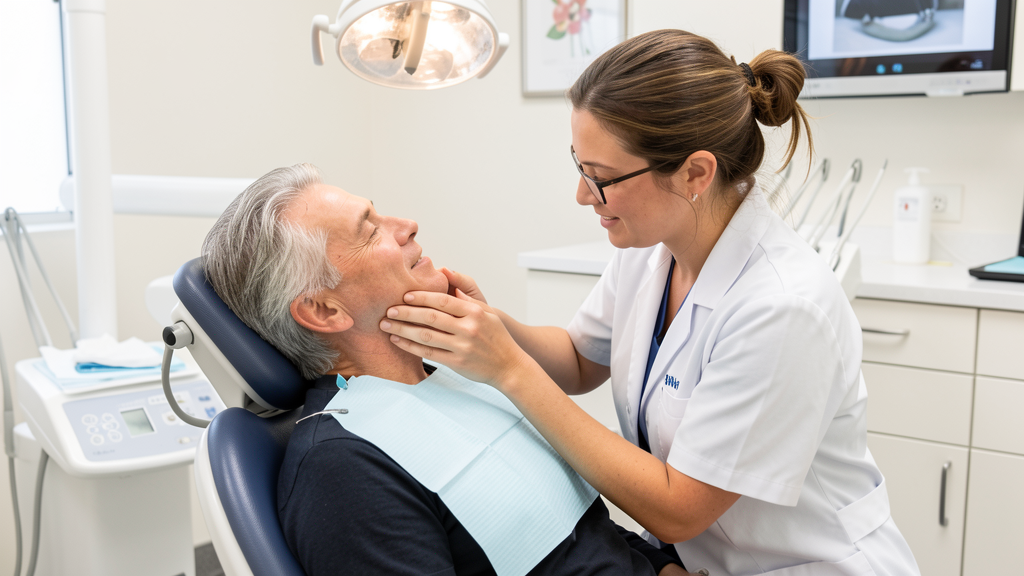
What I ask patients to track
Before a TMJ/TMD visit, it helps to track a few things for one or two weeks:
- When symptoms happen: morning, afternoon, after meals, after work, or overnight
- Where the discomfort is: joint, cheek muscle, temple, ear area, teeth, or neck
- What makes it worse: chewing, stress, workouts, long computer days, caffeine, or poor sleep
- What helps: heat, massage, rest, anti-inflammatory medicine if allowed, or avoiding hard foods
- Whether the jaw ever locks or gets stuck
This makes the appointment more useful. Instead of guessing, we can look for patterns.
Why I avoid overpromising
TMJ/TMD care can be frustrating because symptoms are real, but the causes are not always simple. Some patients respond quickly to conservative steps. Others need more than one approach.
Botox may be helpful for the right patient, but no one should be promised that it will fix every jaw problem. At River Market Dental, I want the plan to make sense clinically. That means we look at the bite, the muscles, the teeth, and the patient's goals before recommending anything.
When to schedule an exam
You should call if jaw pain is lingering, headaches seem tied to clenching, chewing feels difficult, your jaw locks, or you notice new tooth wear or cracked dental work. If swelling, fever, or severe tooth pain is present, that may be a dental emergency and should be evaluated promptly.
For patients near Downtown Kansas City, River Market, Columbus Park, and the streetcar line, we can start with an exam and a straightforward conversation. If Botox belongs in the plan, we will explain why. If it does not, we will say that too.
Ready to talk with our team?
Schedule a TMJ/TMD consultation with River Market Dental
Schedule OnlineCall 816-471-2911Sources used in this article
- National Institute of Dental and Craniofacial Research, TMD information: https://www.nidcr.nih.gov/health-info/tmd
- American Dental Association, teeth grinding overview: https://www.mouthhealthy.org/all-topics-a-z/bruxism
- FDA, Botox prescribing information and medication guides: https://www.accessdata.fda.gov/scripts/cder/daf/