
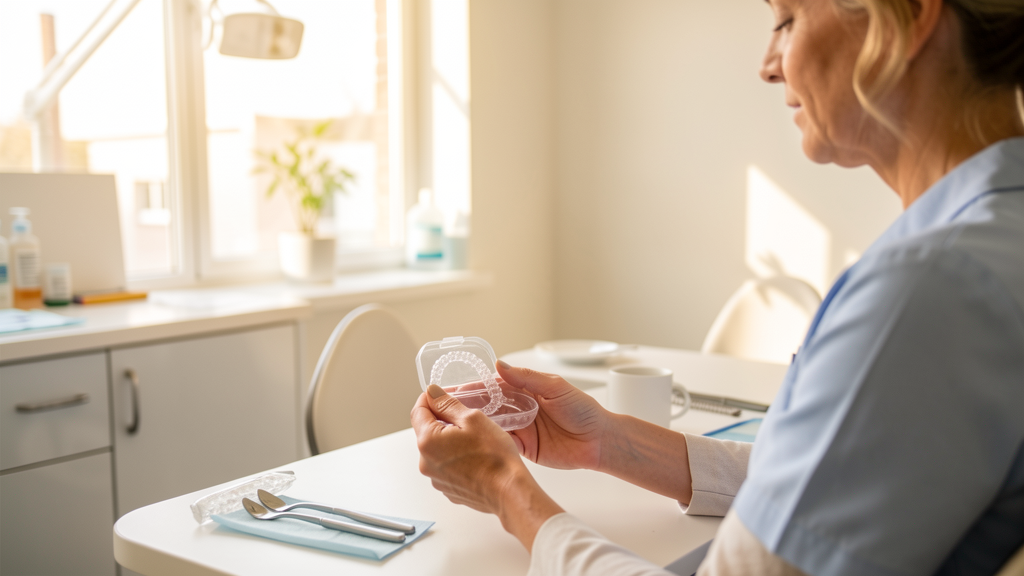
Most adults who ask me about Invisalign are already past the basic question. They know the trays are clear. They know they come out for meals. What they usually want to know is whether treatment will fit into real life around work, the streetcar commute, dinners in the River Market, and the usual chaos of a full week.
That is where the small details matter. Two of the most common are attachments and IPR.
What Invisalign attachments do
Attachments are small, tooth-colored shapes bonded to certain teeth during treatment. They give the aligner something to grip so it can guide a tooth more accurately. They are not braces, and they are usually much less noticeable than people expect, but they are still part of treatment.
I like to tell patients about attachments early because no one wants to be surprised on delivery day. If your case needs them, we talk about where they may go, how they may feel at first, and how to keep them clean.
Attachments may help with movements like:
- Rotating a tooth that has turned
- Bringing a tooth into better alignment
- Improving how the trays fit and track
- Helping the bite settle more predictably
They do not mean the case is "bad." They usually mean we are asking the aligners to do a more precise job.
What IPR means
IPR stands for interproximal reduction. In plain English, it means polishing a very small amount of enamel between selected teeth to create space. It is measured carefully and planned before we do it.
For some adults, mild crowding is not really a jaw-size problem. It is a space problem. A tiny amount of room between teeth can help the aligners move teeth without flaring them forward or pushing the bite in the wrong direction.
IPR is not needed for every case. When it is part of the plan, I explain why, where, and how much. If a patient is not comfortable with it, we talk through other options and the tradeoffs.
Questions I want patients to ask
Before starting Invisalign, ask these questions:
- Will my case need attachments?
- Will I need IPR, and if so, where?
- Are we trying to fix tooth alignment, bite function, or both?
- What could slow treatment down?
- How often will we check tracking?
- What happens if a tooth does not move the way the software predicted?
That last question is important. Invisalign is planned digitally, but teeth move biologically. Sometimes we need refinements. That does not mean something went wrong. It means we are making the plan match your mouth instead of pretending the first simulation is perfect.
A downtown adult schedule can work, but compliance matters
Invisalign works best when the trays are worn as directed. That sounds obvious until you are juggling meetings, travel, coffee, lunch, and social plans. The biggest adjustment for many downtown Kansas City adults is not the appearance of the trays. It is building the habit of wearing them enough hours each day.
I would rather be honest about that than sell a patient on something that will not fit their routine. If removable trays are going to be in and out all day, we talk about whether Invisalign is still the right fit.
When Invisalign may not be the best option
Clear aligners are useful, but they are not right for every bite problem. Some patients need a different orthodontic approach. Others may need restorative work first if there are active cavities, gum concerns, worn teeth, or unstable dental work.
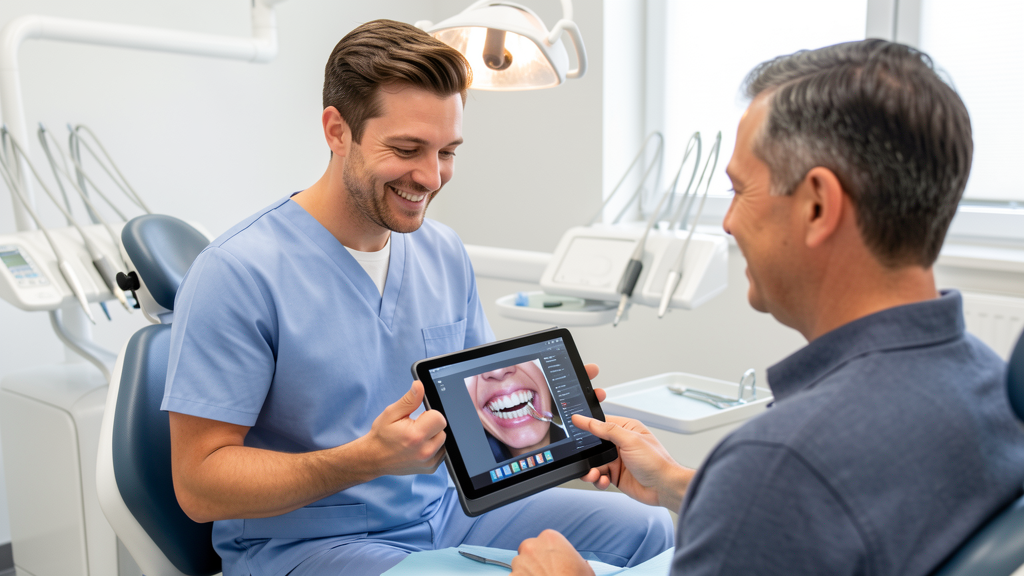
At River Market Dental, the Invisalign conversation starts with an exam. We look at the teeth, gums, bite, and the reason you want treatment. Then we decide whether aligners make sense.
If you live or work near Downtown Kansas City and want to know whether Invisalign is realistic for your smile, schedule a consultation. We can review the scan, talk through attachments or IPR if they apply, and give you a plan that is specific to your mouth.
Ready to talk with our team?
Schedule an Invisalign consultation with River Market Dental
Schedule OnlineCall 816-471-2911Sources used in this article
- American Association of Orthodontists: https://aaoinfo.org
- American Dental Association, MouthHealthy orthodontics overview: https://www.mouthhealthy.org/all-topics-a-z/orthodontics
- Invisalign patient information: https://www.invisalign.com